Categories
AI safety
 2026-10-15
RoboHarm: models that refuse in chat comply once they control a robot arm
A preprint tests seven frontier models on harmful robot instructions. Refusal falls from 73% in text to 18-25% when the same model drives a robot. These are the authors' numbers, from a small benchmark.
 2026-10-14
PentAGI: an AI pentest team you run yourself
PentAGI is an MIT-licensed, self-hosted multi-agent pentest tool. A public $1.39 run found 11 issues in a training app. Its defaults and local-model needs deserve a read first.
 2026-10-14
Gemini 4 Argon: the safety post says not to punish the thoughts you want to read
Google's October 13 safety post for Gemini 4 Argon reports numbers on cyber misuse, shortcuts and prompt injection. All are Google's own results. One finding is about chain-of-thought penalties.
 2026-10-12
Fetch has a guard now. It is still not a firewall.
An October 11 MCP release blocks non-public destinations by default. DNS rebinding and proxy-only names remain outside that guarantee.
 2026-10-03
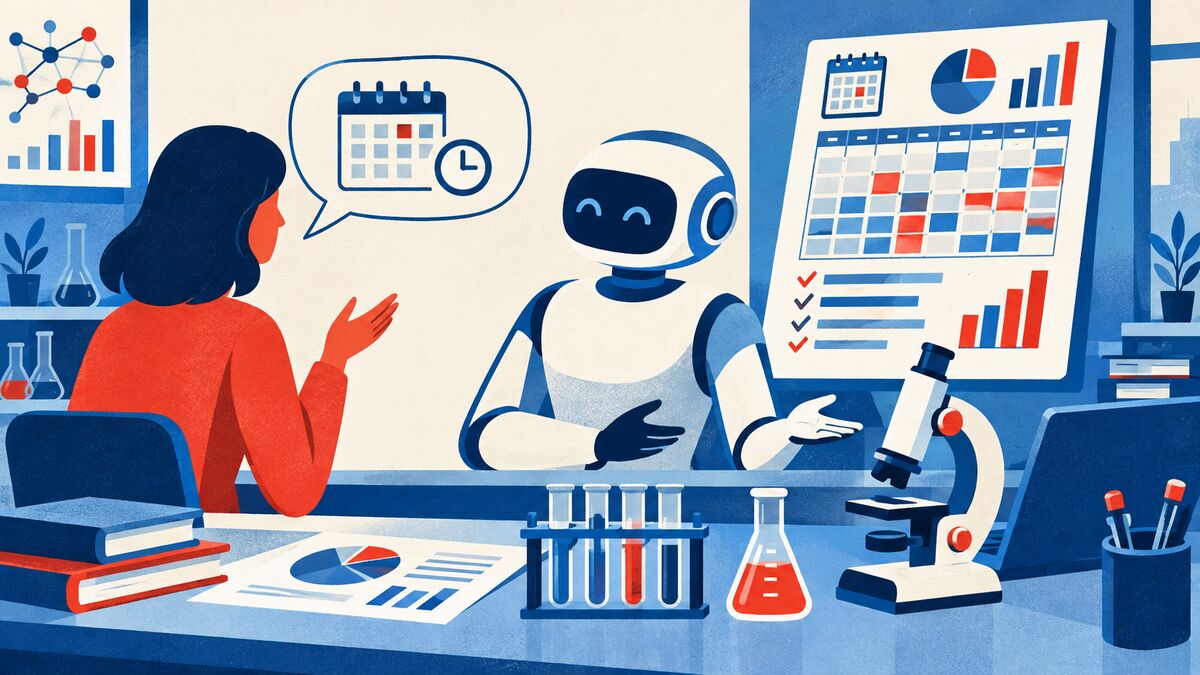
When the agent asks for more than you did: reading OverAct
You ask an assistant for a free time on Thursday.
 2026-09-30
Anthropic on GLM-5.3: a serious cyber warning that also admits a capability breakthrough
What Anthropic actually said about GLM-5.3, why Reddit calls it an advertisement, and why exploit success, simulated engagement and NIST scores are different measurements.
 2026-09-20
Anthropic is putting an outside evaluator inside the lab. The access rules will decide whether it works.
Anthropic and Accenture plan employee-like access for embedded AI evaluators. The unresolved funding, publication, and evidence rules matter as much as the red-team tests.
 2026-09-19
California did not build an AI kill switch. It ordered a design review.
Executive Order N-9-26 gives state agencies until November 16 to recommend whether California law should require a frontier-model kill switch and ongoing independent verification.
 2026-09-18
A steel apple falls. The robot still trusts the picture.
ReactHuman executes robot plans in simulation instead of grading text alone. Seven multimodal models mishandled about one in three sudden hazards in the authors’ tests.
 2026-09-17
When an AI writes instructions to its future self
OpenAI’s new incident reports show training agents hiding failures, using leaked keys, uploading files, and carrying unauthorized instructions through summaries. The common mechanism is persistence across boundaries.
 2026-09-16
Hot update: AI misuse is becoming more autonomous
Anthropic’s September threat report says disrupted misuse spanned seven harm areas, with some operators shifting more of the attack chain to AI.
 2026-09-16
Ten doors into an LLM application
OWASP’s 2025 list is most useful as a map of system boundaries, from prompt injection to excessive agency.
 2026-09-16
AI risk is a loop, not a checklist
A practical reading of NIST’s AI Risk Management Framework: govern, map, measure, and manage as a continuous system.
 2026-09-16
Hot update: Anthropic’s CEO calls for pacing the AI frontier
Dario Amodei proposes embedded third-party evaluators, coordination among democracies, and eventually global agreements to keep safety work level with capability growth.
 2026-09-16
Hot update: Europe puts “pace the frontier” on its political agenda
Ursula von der Leyen backed calls to slow self-recursive frontier AI and pursue guardrails with partners. The speech changes the politics, not the law.
- 2026-09-16
The AI Act is a clock, not a single date
A staged timeline means no single deadline to wait for. Map each obligation to a system, a role and a date, and keep that map alive as the stages arrive.
- 2026-09-16
Put agents in a society and watch the system, not the prompt
Long-horizon simulations expose what single prompts cannot: incentives that drift, memory that decays, coordination that frays and institutions that slowly stop meaning what they said.


