Categories
Technology
 2026-10-22
Inside SHARP Agent Protocol v2: a 22-kilobyte prompt that runs agents like an engineering team
SHARP Agent Protocol v2 is a 488-line instruction set that turns one language model into a managed engineering team: exactly one task per fresh subagent, adversarial tests written before any code, independent verification, and durable memory files that survive context loss. What it does, how to use it, and where its claims outrun the evidence.
 2026-10-22
A constant, at last: the KLS conjecture falls to a human-directed AI search
Microsoft Research's Xinzhi Zhang and Zhao Song proved the 31-year-old KLS conjecture with an agent fleet exploring roughly one hundred research trajectories under human pruning - while unguided AI runs on the same token budget failed. Two independent proofs landed the same week, and a Lean 4 formalization followed.
 2026-10-21
The engine owns the state, the model just paints: Matrix-Game 4.0
Skywork's playable world model splits the job: a real game engine keeps the rules and draws a cheap low-poly proxy, a coding agent rewrites the rules when the player asks, and a 5B causal video model distilled to one denoising step only renders. Weights are Apache-2.0 - but training code and data stay closed.
 2026-10-20
The text encoder was optional all along: Halcyon beats pretrained T2I at 275x less compute
Stanford and Radical Numerics train text-to-image models from scratch on 100M image-text pairs with no language pretraining, beat retrained LlamaGen and JiT-T2I baselines, and show in three controlled experiments that language pretraining does not help. Ten models downloadable from Hugging Face - but no license file.
 2026-10-19
The NIST curve seeds were just timestamps: Claude closes a 25-year cryptography mystery
Anthropic says an internal research model reconstructed the origins of the NIST P-192 through P-521 seeds in under half an hour: not a hashed passphrase, but the C library's lrand48 generator seeded with Unix timestamps from 1997-1998. Filippo Valsorda verified the claim with a Go reimplementation and paid the bounty; the $36,864 goes to the ISRG. Not a break - confidence, with receipts.
 2026-10-18
DeepSeek-V4.1-Flash-1017: a minor version with agentic jumps, weights under MIT, and no Jinja template
DeepSeek posted V4.1-Flash-1017 on Hugging Face on October 17: 763B parameters, 1M-token context, image-text input, MIT license on repo and weights. Its own table shows DeepSWE 74.2 to 77.0 and Terminal-Bench 31.2 to 42.3, while Opus 5 still leads several columns. The chat template ships as a Python reference and a Rust toolkit, not a Jinja string.
 2026-10-17
OpenGCUA: Alibaba opens the computer-use stack, but the model is not in the box
Alibaba's MAI-UI team released OpenGCUA: an open harness, SDK, prompts and evaluation trajectories for generalist computer-use agents, with OSWorld-v2 gains reported across eight frontier models. The trained model is promised, not shipped. Apache-2.0, and the numbers are the team's own.
 2026-10-16
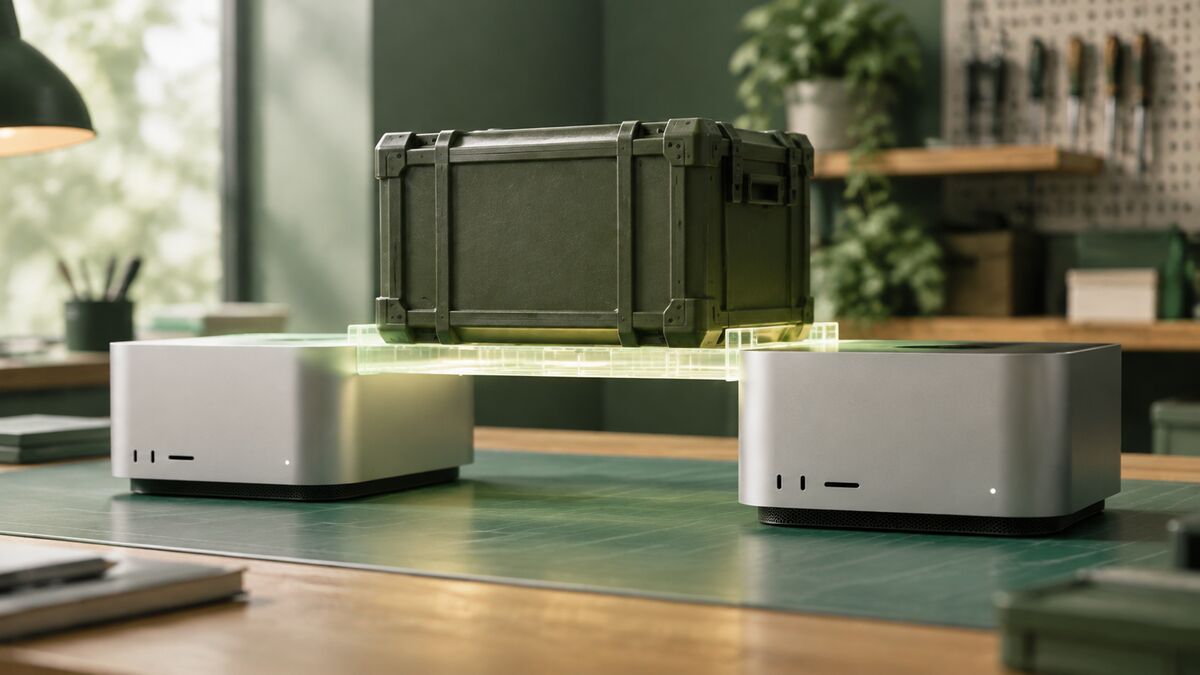
Muse Spark Open: Meta's 816B open-weight model fits on two Mac Studios, with conditions
Meta released Muse Spark Open, an 816B mixture-of-experts model with a 1M-token context, under its own Muse Model License. Meta's card shows it leading some agentic tests and trailing Kimi K3 and GLM 5.3 on others. The numbers and terms are Meta's.
 2026-10-14
PentAGI: an AI pentest team you run yourself
PentAGI is an MIT-licensed, self-hosted multi-agent pentest tool. A public $1.39 run found 11 issues in a training app. Its defaults and local-model needs deserve a read first.
 2026-10-14
Gemini 4 Argon: the safety post says not to punish the thoughts you want to read
Google's October 13 safety post for Gemini 4 Argon reports numbers on cyber misuse, shortcuts and prompt injection. All are Google's own results. One finding is about chain-of-thought penalties.
 2026-10-13
Muse Wonder has two doors, and only one is public
Meta's October 12 launch splits one model family into an API tier and a subscriber-only tier. The benchmarks are self-reported and the safety report is still pending.
 2026-10-13
Freebuff review: free and ad-funded, but not "free tokens"
Freebuff's own pages describe a free, ad-funded coding agent with desktop, CLI, web, cloud and chat products. Access is counted in sessions and Freebucks. An Android app exists; iOS is listed as coming soon.
 2026-10-12
Fetch has a guard now. It is still not a firewall.
An October 11 MCP release blocks non-public destinations by default. DNS rebinding and proxy-only names remain outside that guarantee.
- 2026-10-11
Agnes 3.0 Flash Overclock reviewed: a checker, a QA panel and an honest benchmark
A read of the public Agnes 3.0 Flash Overclock repo: what is in it, what I ran myself, and what its own documents say is untested. The strongest part is how plainly it states its limits.
- 2026-10-10
AnyTest.dev reviewed against QA Wolf, mabl and Testim: where each fits
I read the public pages of AnyTest and three other testing vendors. In my reading, AnyTest is the most direct about starting from a URL and leaving tests for you to review. It is not the answer for mobile or fully managed QA.
 2026-10-04
Windows 11 26H2 is a small download. Plan for the switches it turns on
The update that turns Windows 11 into version 26H2 can be a small download and a single restart.
 2026-09-29
MLX Studio on Mac: the local AI app is a server, a model manager and a trust boundary
A source-based technical review of MLX Studio 1.6.71: MLX and unified memory, model formats, caching, APIs, local privacy exceptions and its alternatives.
 2026-09-29
The melon that would not wobble here: reading a GLM-5.3-Flash WebGPU build
The page describes Melon Jelly as a GLM-5.3-Flash creation. Its single-file source holds a tetrahedral soft body, WebGPU lighting and a careful fallback. The motion itself still needs a GPU test.
 2026-09-28
Seven AI labs, one claims desk: the real tests for 2027
A multilingual claims desk reveals how Qwen, Z.AI, Moonshot, OpenAI, Anthropic, StepFun and Agnes differ in architecture, deployment and failure. A sourced history and falsifiable 2027 test.
 2026-09-25
Linker review: a score is a diagnostic, and the live audit failed
An honest source and live-app review: useful diagnostics, an audit that failed, simulated citations, and no verified MIT license.
 2026-09-24
fast-mailer: how taking the model out of the send step cut an email to seconds
fast-mailer lets an AI agent send Gmail with one shell command instead of driving a mail UI. How it works, what I checked in the code, and the limits of a day-one tool.
 2026-09-16
Hot update: OpenAI turns ads into sponsored agent conversations
OpenAI is testing clearly labeled Sponsored Agents in ChatGPT and adding prompt-driven campaign tools. The core risk shifts from ad placement to conversational influence.
 2026-09-16
MCP is a contract, not magic
Model Context Protocol standardizes how AI applications exchange context and capabilities. The security work still belongs to the implementer.
 2026-09-16
A live model has to think on someone else’s clock
Real-time voice AI turns latency, interruption and turn-taking into core constraints on how a model reasons, because the listener sets the pace rather than the model.
 2026-09-16
Embeddings are coordinates for meaning
An embedding turns text into a vector, a list of coordinates. Retrieval then asks which stored vectors sit closest, and every choice in that pipeline quietly shapes what counts as similar.
 2026-09-16
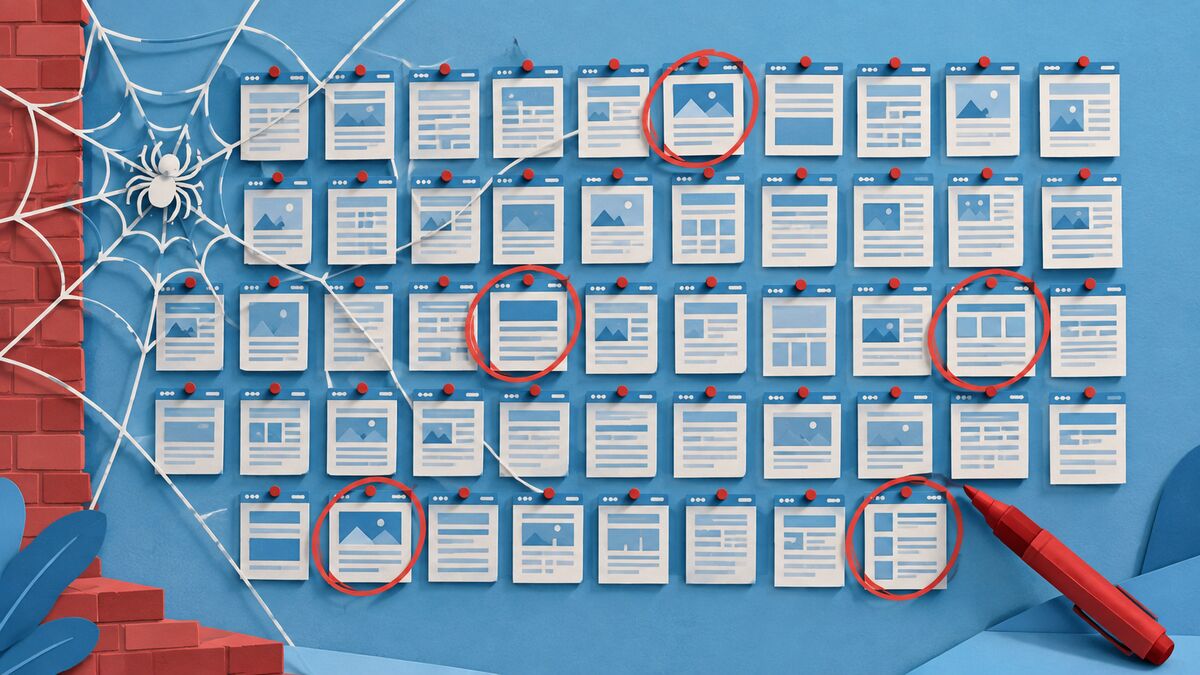
BACKR review: a fast SEO audit with useful proof and rough edges
I ran BACKR against this site, watched it crawl 50 pages, examined 119 findings, and tried its AI roadmap. The audit is useful, but some “critical” findings need human verification.


