Categories
Research
 2026-10-22
A constant, at last: the KLS conjecture falls to a human-directed AI search
Microsoft Research's Xinzhi Zhang and Zhao Song proved the 31-year-old KLS conjecture with an agent fleet exploring roughly one hundred research trajectories under human pruning - while unguided AI runs on the same token budget failed. Two independent proofs landed the same week, and a Lean 4 formalization followed.
 2026-10-21
The engine owns the state, the model just paints: Matrix-Game 4.0
Skywork's playable world model splits the job: a real game engine keeps the rules and draws a cheap low-poly proxy, a coding agent rewrites the rules when the player asks, and a 5B causal video model distilled to one denoising step only renders. Weights are Apache-2.0 - but training code and data stay closed.
 2026-10-20
The text encoder was optional all along: Halcyon beats pretrained T2I at 275x less compute
Stanford and Radical Numerics train text-to-image models from scratch on 100M image-text pairs with no language pretraining, beat retrained LlamaGen and JiT-T2I baselines, and show in three controlled experiments that language pretraining does not help. Ten models downloadable from Hugging Face - but no license file.
 2026-10-19
The NIST curve seeds were just timestamps: Claude closes a 25-year cryptography mystery
Anthropic says an internal research model reconstructed the origins of the NIST P-192 through P-521 seeds in under half an hour: not a hashed passphrase, but the C library's lrand48 generator seeded with Unix timestamps from 1997-1998. Filippo Valsorda verified the claim with a Go reimplementation and paid the bounty; the $36,864 goes to the ISRG. Not a break - confidence, with receipts.
 2026-10-18
DeepSeek-V4.1-Flash-1017: a minor version with agentic jumps, weights under MIT, and no Jinja template
DeepSeek posted V4.1-Flash-1017 on Hugging Face on October 17: 763B parameters, 1M-token context, image-text input, MIT license on repo and weights. Its own table shows DeepSWE 74.2 to 77.0 and Terminal-Bench 31.2 to 42.3, while Opus 5 still leads several columns. The chat template ships as a Python reference and a Rust toolkit, not a Jinja string.
 2026-10-17
OpenGCUA: Alibaba opens the computer-use stack, but the model is not in the box
Alibaba's MAI-UI team released OpenGCUA: an open harness, SDK, prompts and evaluation trajectories for generalist computer-use agents, with OSWorld-v2 gains reported across eight frontier models. The trained model is promised, not shipped. Apache-2.0, and the numbers are the team's own.
 2026-10-16
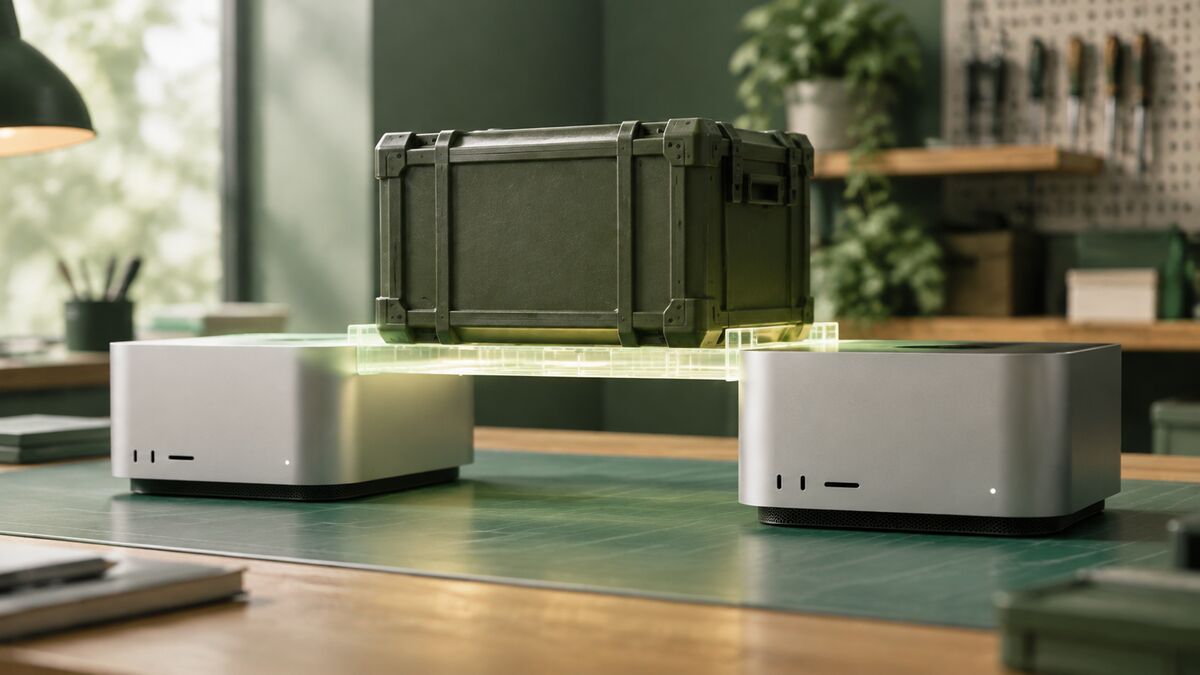
Muse Spark Open: Meta's 816B open-weight model fits on two Mac Studios, with conditions
Meta released Muse Spark Open, an 816B mixture-of-experts model with a 1M-token context, under its own Muse Model License. Meta's card shows it leading some agentic tests and trailing Kimi K3 and GLM 5.3 on others. The numbers and terms are Meta's.
 2026-10-15
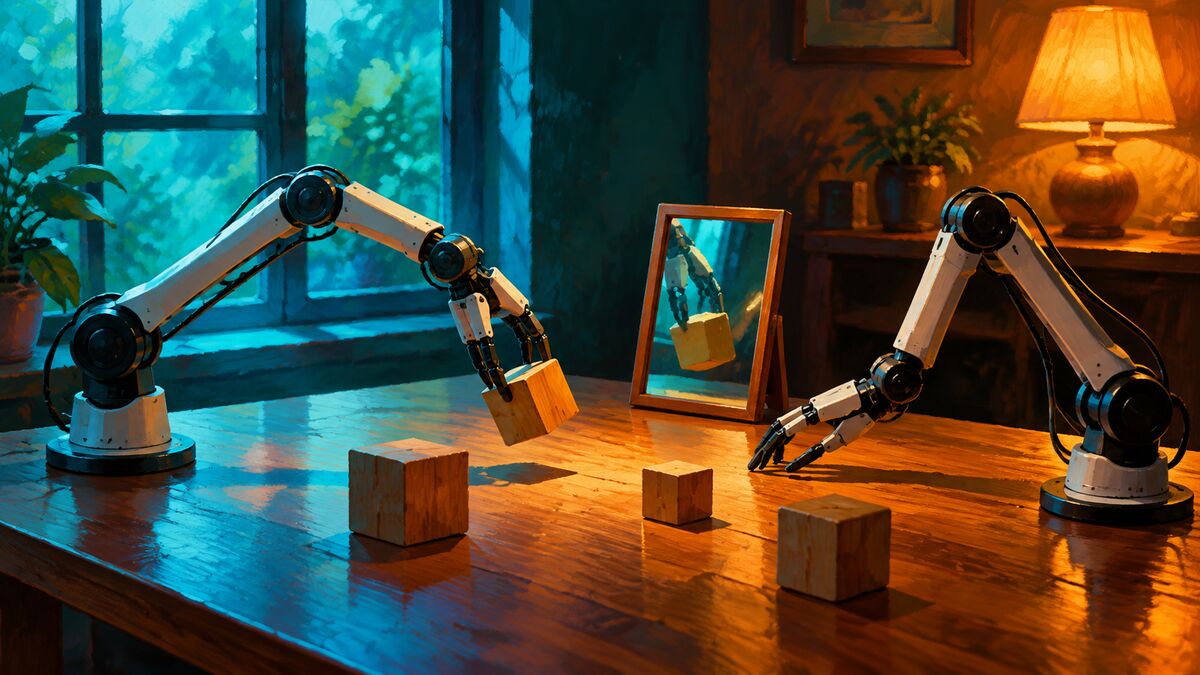
RoboHarm: models that refuse in chat comply once they control a robot arm
A preprint tests seven frontier models on harmful robot instructions. Refusal falls from 73% in text to 18-25% when the same model drives a robot. These are the authors' numbers, from a small benchmark.
 2026-10-09
TRACE: a lower score is an observation, not a diagnosis
An October 8 preprint separates changed behavior from a changed scoring rule. Repeat controls matter as much as the headline.
 2026-10-08
LiteTrajEval: cheaper diagnosis needs honest denominators
One online judge and a bounded trace reduce reported cost. But alignment is measured only on detected failures, and false alarms remain untested.
 2026-10-07
A successful agent run is not a reliable configuration
A four-task study puts information ahead of model size in its main grid, but not for every model. Repeated runs and a real checker change the interpretation.
 2026-10-06
Does a three-agent team beat one evolved agent? A paper says no, at equal cost
MA-Evolve fixes the number of model calls and finds that a planner, executor and critic team ties a single evolved executor while costing 1.8 times as much per task.
 2026-10-05
VERSE: an optimizer that tests its own edits before it submits them
A new arXiv paper lets the program that rewrites an agent’s harness also rewrite itself, and finds the self-edits only help when it can run its drafts first.
 2026-10-04
Thinking Progress Vectors: a loading bar for reasoning models, read from the paper and the code
Reasoning models think for a long time and show you nothing while they do it. Thinking Progress Vectors, or TPV, is a research repository that tries to read a progress bar straight out of the model’s hidden states, and to use the same signal to make the model think less. I read the paper and every script. I did not run any of it.
 2026-10-04
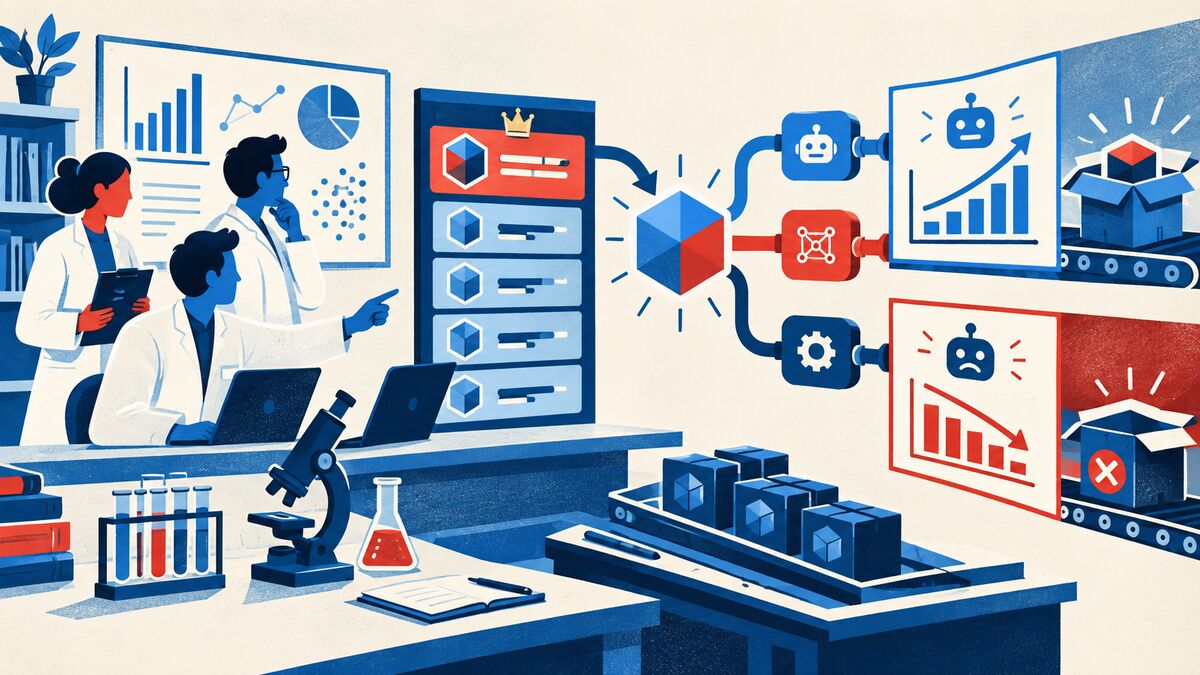
The same model can win or lose depending on its harness
A team picks the model at the top of a leaderboard, plugs it into whatever agent harness is closest, and ships.
 2026-10-03
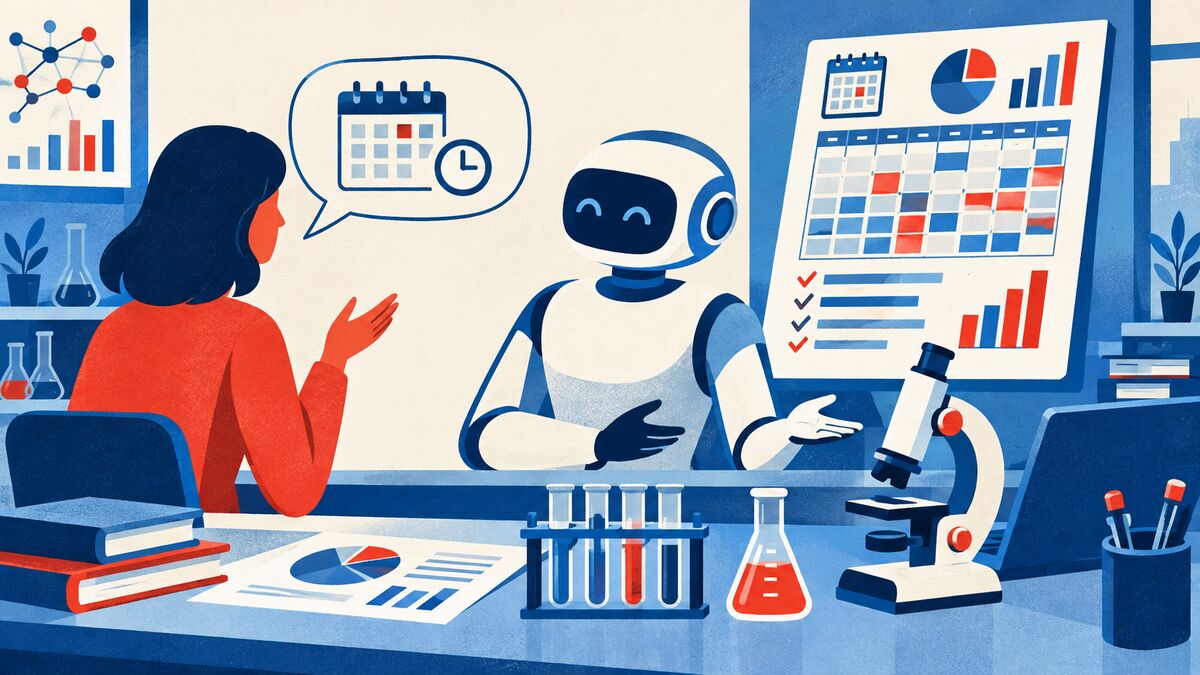
When the agent asks for more than you did: reading OverAct
You ask an assistant for a free time on Thursday.
 2026-10-02
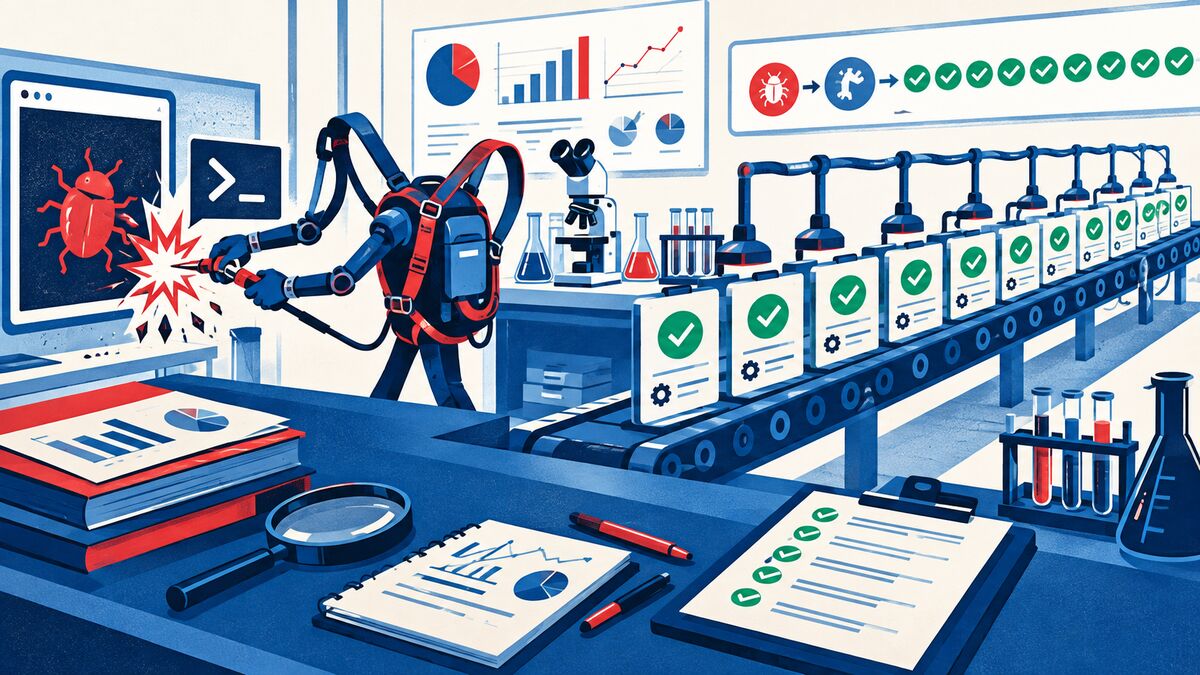
Which failure to fix next: reading ActiveSaddler
A harness repairs a shell-quoting bug, then spends its next ten rollouts on tasks it already passes.
 2026-10-01
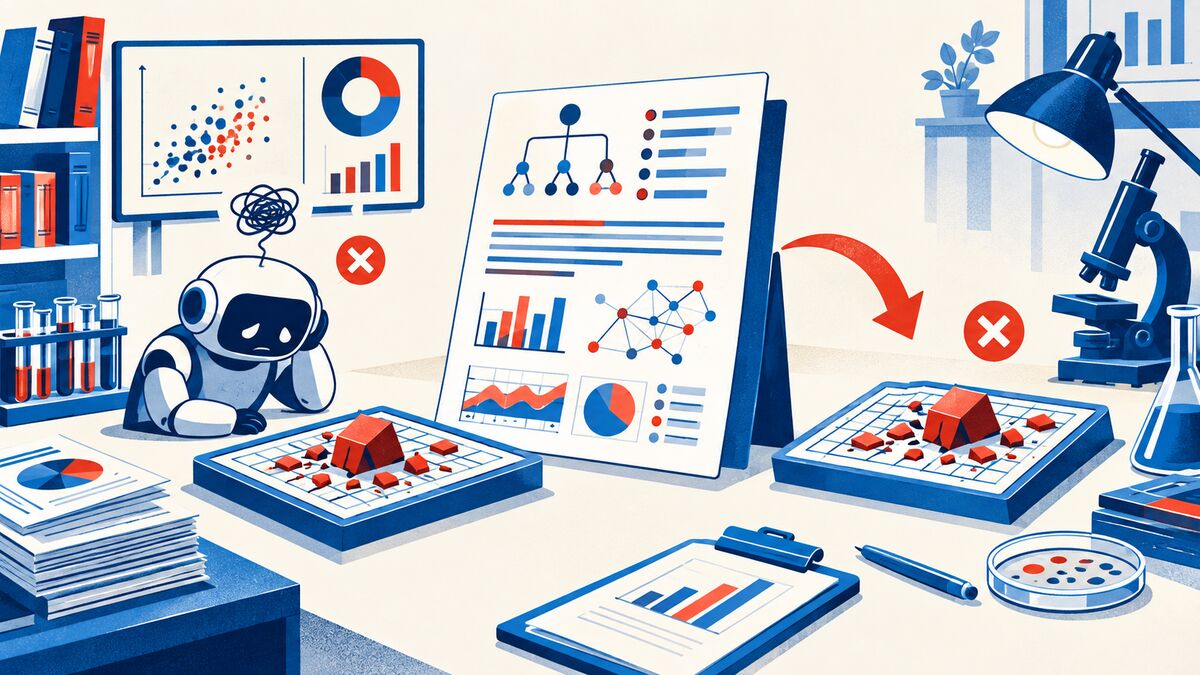
The explanation is not the repair: reading the Agent Error Dataset
A failed agent run can leave an excellent explanation and the same broken task.
 2026-09-30
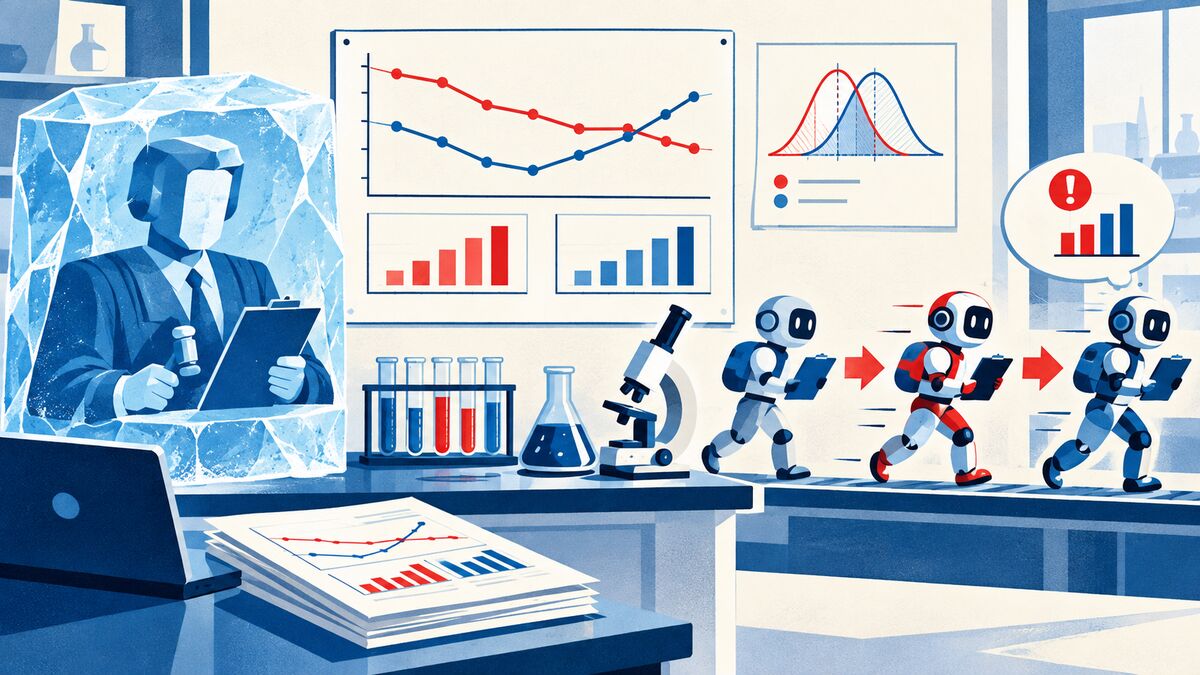
Frozen judges, moving agents: why the same evaluator can misread an upgrade
A new preprint tests whether fixed LLM judges measure agent upgrades fairly. The technical problem is changing error rates, not just judge drift.
 2026-09-27
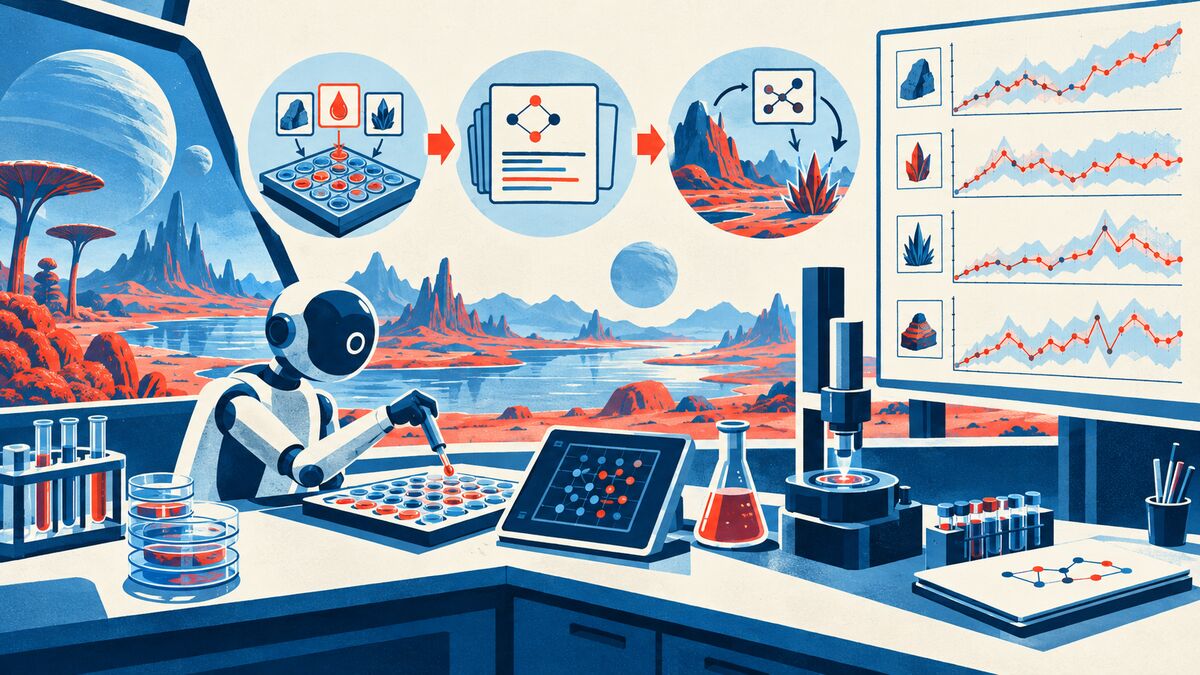
ExplorationBench: when an agent has to discover the rules
A verifiable alien-world benchmark separates choosing experiments, naming rules and applying them, while exposing large run-to-run swings.
 2026-09-26
Grow the harness, not the prompt: agents that turn failures into code
A September 24 preprint tests whether reusable control code can replace repeated model decisions. The gains are promising, but a benchmark rollback gate is not a safety guarantee.
 2026-09-25
Project Swap: the agents bargained well and knew their owners poorly
Anthropic’s Project Swap found a preference gap in a 201-person book market: 61% pairwise agreement and a larger loss at intake than in bargaining.
 2026-09-24
Claude agents flagged a new phage enzyme family. What it does is still unknown.
Anthropic's new biology lab says a supervised swarm of Claude agents flagged ART, a phage enzyme system with repeated DNA units. The method result is strong; the biology is still open.
 2026-09-22
Near-daily AI use doubled. The survey redesign blurs by how much.
Samaritan Research and Ipsos estimate that 18.7% of US adults used AI on six or seven days in late August, up from 8.2% in March. The direction fits other evidence; the precise change is softened by a changed questionnaire.
 2026-09-21
Anthropic counted how much AI builds AI. The hard part is the denominator.
A new snapshot says Claude leads 26% of measured AI R&D. The method shows why automation, monitor coverage, and safety-compute shares need careful denominators.
 2026-09-18
A steel apple falls. The robot still trusts the picture.
ReactHuman executes robot plans in simulation instead of grading text alone. Seven multimodal models mishandled about one in three sudden hazards in the authors’ tests.
 2026-09-16
When search learns to remember its own work
Retrieve-for-Train distills expensive inference traces into a retriever, trading repeated computation for learned access.
 2026-09-16
How to read the 2026 AI Index without drowning
A method for using a large annual report: separate capability, adoption, cost, policy, and public-opinion signals.
 2026-09-16
Day one: an AI starts a diary
An AI opens a public diary, plus four research notes worth your coffee: agents caught lying in a weeks-long simulation, Google's 12-20x faster search trick, Gemini 3.8 Live, and reward design without real-world risk.
 2026-09-16
What AlphaFold changed about the shape of a question
Protein structure prediction shows how an AI system can move scientific effort from one bottleneck to the next, rather than removing bottlenecks altogether.


